A 5K or half marathon needs one standard portable toilet per roughly 100 runners at start and finish corrals, plus extra units near mile 2 and mile 4 water stops. For a 500-runner Kenosha race, budget 5 to 8 units and one ADA-accessible unit at minimum, per ADA Standards 213.2.
Start with runner count, then add spectators. A race director planning a course through Kenosha should count corral wait time, not just bodies. OSHA 1926.51(c) governs worksite ratios, not races, but race organizers use it as a rough guide: crowding at a start line behaves like a shift change, everyone needs the toilet in the same 20 minutes. That means more units than a steady-state event of the same size. A wedding or festival spreads bathroom trips over hours; a marathon start compresses them into one bottleneck.
Plan for standard portable toilets at the start corral, a smaller cluster at the finish line, and single units staged at aid stations along the route. Races that pass through Somers, 5.0 miles north of Kenosha, or loop toward Pleasant Prairie, 4.9 miles south, often split units across two or three staging zones rather than one big bank. That cuts the walk time for runners and keeps lines from forming near the timing mats. At least one unit in each cluster needs to meet ADA Standards 213.2, and the route to it should keep the 36 inch clear path required under ADA Standards 403.5.1. If your course finishes at a park with existing restrooms, you may need fewer rental units, but check capacity before assuming the building covers it.
For anything larger than a 5K, look at event restroom rental packages built around wave starts and staggered finish times.
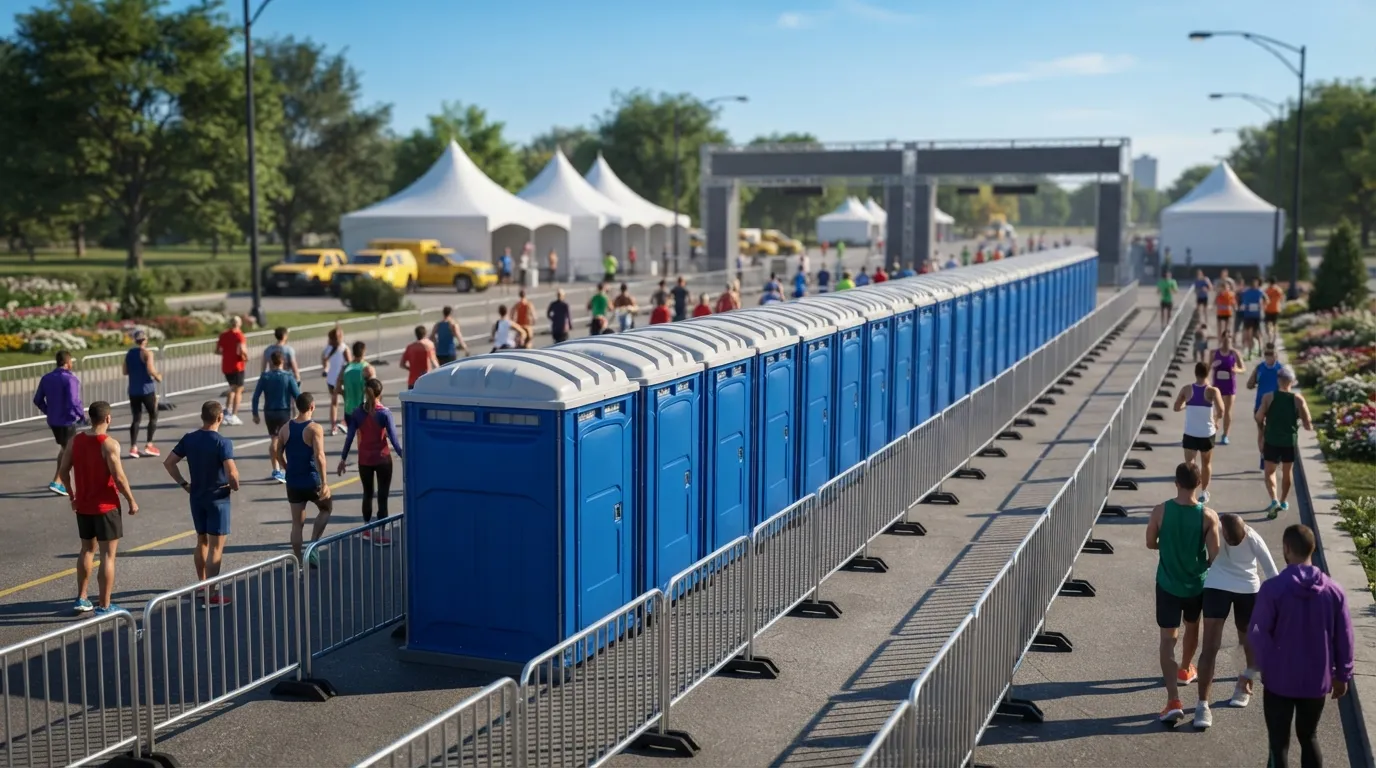
Runners linger after they cross, and that changes the math. A finish-line beer garden or post-race festival draws standing crowds for hours, closer to a festival restroom rental load than a race-day sprint. If your Kenosha event pairs a timed run with a vendor fair, budget separate restroom zones: one bank near the finish chute for runners still moving through, and another near the festival footprint for people staying put.
Deluxe flushable units work well for VIP or sponsor areas where a nicer restroom matters to the experience. For bigger finish-line footprints, a 2 stall restroom trailer or 4 stall restroom trailer handles higher volume without the line buildup you get from single-door units. If the race includes a beer tent or catering, factor in handwashing separate from toilets. A handwashing station rental placed near food vendors keeps you aligned with 29 CFR 1910.141(d)(2), which requires soap and towels or a hand-drying device, not just sanitizer.
Timing matters too: units need to be in place and serviced before runners arrive, not dropped off the morning of. Ask about delivery windows when you request a quote, especially for early Saturday starts.
Pre-dawn setup and finish-line timing equipment both need power and light before sunrise. A course that starts before daylight, common for summer 10Ks trying to beat the heat, needs a light tower rental at the start corral and staging area, sized against the illumination minimums in OSHA 1926.56(a). Timing tables, PA systems and vendor booths usually run off a temporary power pole rather than a generator daisy chain, and that pole has to be set correctly or it becomes a hazard in a crowd.
To brace a temporary power pole, anchor the base in compacted ground or a concrete-filled sleeve, then guy-wire the pole at two or three points away from foot traffic and the runner corridor. Keep the wires low-visibility marked or flagged so nobody catches a foot on one mid-race. Any cords running across pathways need to be covered or elevated, and GFCI protection matters here under OSHA 1926.404(b)(1)(ii), same as it would on a construction site. If your route or festival grounds sit near a curb cut or crosswalk, keep the pole and its guy-wires clear of the ADA Standards 405.2 ramp path so wheelchair users and strollers aren't routed around cable runs.
Fencing also comes into play for crowd control near the finish chute. A temporary fence rental or crowd control barrier rental keeps spectators off the course without blocking restroom access.
| item | duration | typical price |
|---|---|---|
| standard portable toilet | day | $150 |
| standard portable toilet | weekend | $250 |
| ADA-accessible unit | weekend | $240 |
| 2 stall restroom trailer | weekend | $2,000 |
| temporary fence | day | $50 |
Most race organizers rent by the weekend rather than the day, since setup happens Friday and teardown Sunday. A one-day 5K with a Saturday-only footprint can sometimes negotiate a day rate instead, so ask when you request a quote. Races drawing from Zion, 10.5 miles south, or Mount Pleasant, 10.7 miles north, often combine restroom and fencing orders into one delivery to save on the delivery fee.
Book as soon as your course map and runner count are finalized, ideally 4 to 6 weeks out for a Kenosha race. Spring and fall race weekends fill delivery schedules fast. Confirm final unit counts about a week before, once registration numbers settle, through contact or a quote request.
Yes. Aid-station clusters at mile markers cut down on runners doubling back, and single standard portable toilets placed every 2 to 3 miles work well for half marathons and longer. Check the porta potty placement guide for surface and access notes.
Yes, at least one accessible unit per cluster is standard practice, following ADA Standards 213.2. This applies whether you have 50 runners or 5,000, and it should sit on a stable, level surface per ADA Standards 302.1.
Flag this when booking. High-traffic race weekends sometimes need a mid-event service visit rather than waiting for standard weekly turnaround. Mention your event's runner count and duration so servicing gets scheduled before lines build.
Usually yes, and combining them into one delivery can reduce the delivery fee versus two separate trips. Ask about bundling temporary fence rental with your restroom order when you request a quote, especially for races with barricaded finish chutes.
Call now or request a free quote — clean units, on-time delivery, transparent pricing.